Prokinetics for SIBO means addressing the mechanical barriers that stop a motility signal from working, not just taking a supplement. As Kieran puts it: "3 hours between meals is not enough to allow proper motility. For most 5 hours isn't either."
Why does meal timing matter for SIBO?
Let's say it's 11am and you're eating a clean lunch, chicken breast, rice, broccoli and maybe a small drizzle of olive oil. For 7 hours this meal is still in your small intestine. It's still in there until 6pm. If you eat at any point before it's left this meal essentially gets stuck (due to ileal braking and disruption of the mmc), being left to ferment whilst the food above catches up.
This is because of a concept I have called bolus distancing, which states that at any one time no two boluses (meals) should be in the same intestine. If you consume another meal whilst meal 1 is still in the small intestine the likelihood bacteria ferment and overgrow is much higher. If you wait until it has left instead of getting stuck the gastrocolic reflex pushes it further down the large intestine which is positive for digestion.
By this logic it seems 2 meals a day spaced 7-9 hours apart may be best for SIBO and IBS patients, as it reduced the total amount of time a meal would sit in the small intestine potentially being fermented. A few things to note are:
- Fats may slow gastric emptying, meaning the time it takes for a meal to leave your small intestine is longer
- Proteins may slow small intestinal transit also, so this is a factor to account for
- Methane SIBO obviously slows transit time, which in this case some of it can be offset by use of prokinetics
- Poor bile flow and low stomach acid are also factors which play into the total time it takes food to leave
- High stress may also play a role, as with a sedentary lifestyle
The important part is you do your best to space meals to the point where consumption is avoided whilst the small intestine has contents within. If you want to know how on earth you do that that's a question I had myself. I've spent the last 5 hours building a research based mathematical calculator for exactly this. It'll be integrated into my AI health coach GutFix at some point in the near future, but until then you can sign up to the waitlist and get a free symptom assessment and support plan in the meantime.
If one has working stomach acid, bile flow, doesn't live a sedentary life and utilises prokinetics I think reasonably 5 hours could be a safe stretch. And of course not everyone who violates this law gets SIBO it just likely increases the risk factor. If your current eating feels good digesting and gives you good regular bowel movements then it's probably good for you.
Which drinks reveal how well your prokinetic signals are working?
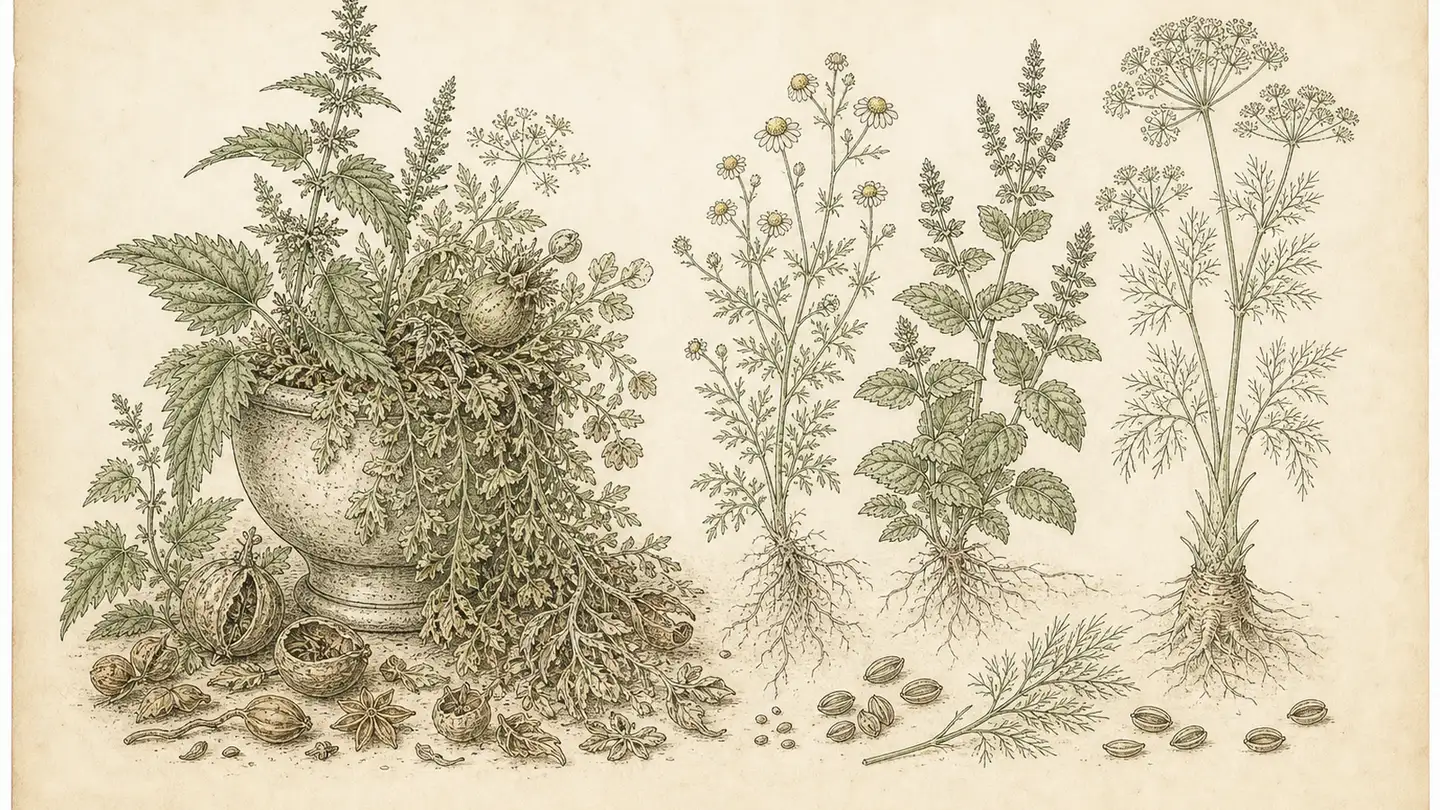
Now ginger tea. Ginger is one of the most well-studied prokinetics we have. A double-blind study showed it halved gastric emptying time from 27 minutes down to 13 and increased antral contractions. It also stimulates bile flow and gallbladder motility.
If ginger tea helps, it tells you three things at once. Your motility is sluggish. Your acid production is weak. Your bile flow is low. One drink, three signals. That's why ginger shows up in almost every gut protocol.
If it burns your stomach, same story as the ACV. Your lining can't handle the stimulation. If ACV burned you AND ginger burned you, those aren't two separate reactions. That's the same damaged gut lining showing up in two different glasses. Two drinks just confirmed the same root cause.
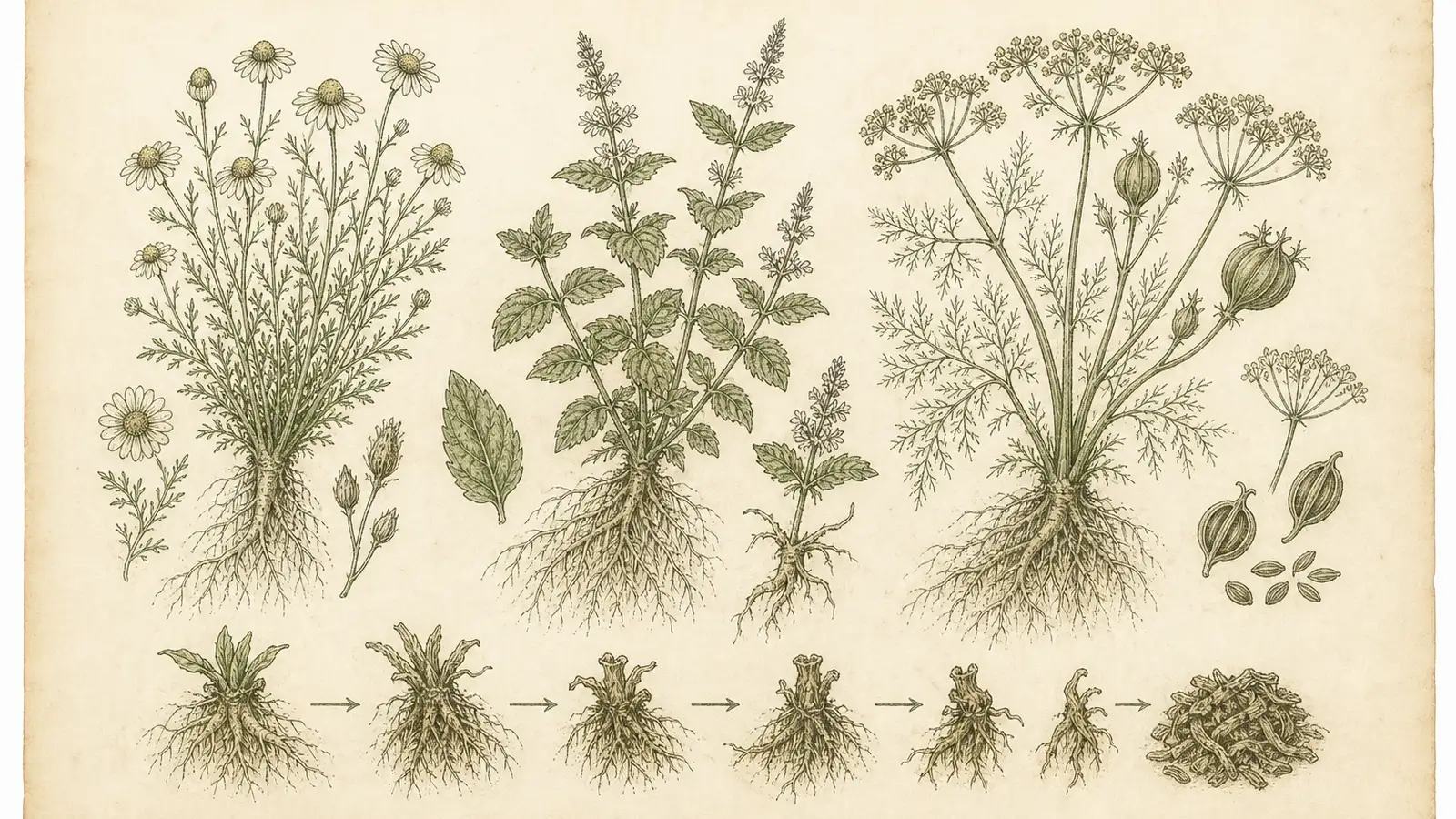
Peppermint tea calms your gut? You're dealing with spasm, muscles clenching instead of moving rhythmically. Peppermint blocks the calcium channels that cause smooth muscle contraction. Dandelion root tea relieves heaviness after meals? Bile was the bottleneck. Studies show dandelion increases bile production by up to 40%. Fennel tea settles your stomach specifically? Your gastric motility is the issue. Research shows fennel relaxes the upper stomach while increasing contractions in the lower stomach, exactly what's needed when food sits too long.
Why doesn't vagus nerve work fix motility on its own?
See your vagus nerve is the engine of digestion and it's clearly running well in your case. But between that nerve signal and your gut actually moving there are mechanical systems that translate the signal into movement. When those are damaged your nervous system can fire perfectly and nothing responds.
The first system is stomach acid. Your vagus nerve directly stimulates acid production, so if you've been doing vagus nerve work and your acid is still low that tells you something else is suppressing it. Chronic inflammation from downstream bacterial overgrowth produces TNF-alpha and IL-1beta which directly inhibit parietal cells through every stimulatory pathway simultaneously, meaning the inflammation is actively overriding your vagal signal.
The second system is the one nobody's talking about and it might be the most important. Your gut has specialised cells that sit between the nerve endings and the smooth muscle, and their job is to translate nerve signals into coordinated waves of contraction. Without them the vagal signal arrives and has nowhere to go. Think of it as the transmission in a car, the engine revs but the wheels don't turn.
In patients with slow transit constipation these cells are depleted by 40-100%. In gastroparesis the loss ranges from 60-100% depending on the region. And here's what connects this directly to your vagus nerve work, during vagal stimulation these cells become the dominant pacemaker in the gut. Meaning your breathwork is specifically strengthening a signal that depends on these cells to translate into movement, and in slow transit patients those cells are severely depleted.
You'll recognise this pattern if you feel cramping and clenching but nothing actually moves forward, if your gut seems to be trying but can't coordinate, if prokinetics give you spasms instead of smooth movement. Chronic inflammation is what damages them. The same inflammation from bacterial overgrowth, endotoxin, and a damaged gut lining that's been running in the background while you focused on calming your nervous system.
Zinc L-Carnosine and Butyrate lower that inflammation directly. Quercetin and Curcumin support regeneration of these cells, with research showing up to 40% improvement in survival rates. The transmission can be rebuilt.
How does methane gas block prokinetic effort?
The third mechanical barrier is the gas itself. Methane directly paralyses smooth muscle, producers show 59% slower transit. Even with a perfect vagal signal and fully functioning pacemaker cells your gut cannot contract through that wall of pressure.
Atrantil starves the methanogens of hydrogen. Red yeast rice blocks the enzyme they use to produce gas. Together you can see roughly 70% reduction in methane output.
So when you put it all together, your vagus nerve sends the signal but inflammation is overriding it at the stomach, the cells that should translate the signal into coordinated movement are 40-100% depleted, and even if they were working methane has the muscle locked in place. Three mechanical barriers that no amount of breathwork releases. Not because the breathwork doesn't matter, it does, but because it's been strengthening a signal that had nothing to work with.
Keep the vagal engine running. Breathwork, meditation, cold exposure, all of it amplifies results once the mechanical barriers come off. But release the brakes too, because a strong vagal signal driving a gut that can actually respond is a completely different experience.